Wednesday, December 17, 2014

"One brewery, one name, one beer...Orval"


This trappist brewery Brasserie d'Orval is located within the walls of the Abbaye Notre-Dame d'Orval in the southeastern nook of the Gaume region of Belgium.  The beer was first made in 1931 and is produced by a unique strain of yeast.  The beer is amber in color with a nose of herbs and vegetables and soft aromatic spices.  The palate is vegetal with mandarin zest, hints of olives and small champagne-like bubbles that lead to a lingering bitterness finish.

So what exactly is a Trappist monastery?

In 1997, eight Trappist abbeys founded the International Trappist Association (ITA) to prevent non-Trappist commercial companies from abusing the Trappist name.  The private association created a logo that is assigned to goods (beer, cheese, wine, etc.) that respect particular criteria.  In the case of beer all the following must be adhered to:

  • The beer must be brewed within the walls of a Trappist monastery, either by the monks themselves or under their supervision.
  • The brewery must be secondary importance within the monastery and it should witness to the business practices proper to a monastic way of life.
  • The brewery is not intended to be a profit-making venture.  The income covers the living expenses of the monks and the maintenance of the buildings and grounds.  Whatever remains is donated to charity for social work and to help persons in need.
  • Trappist breweries are constantly monitored to assure the irreproachable quality of their beers.
Orval is truly a unique beer tasting experience...I myself was put off at first, but have since come to admire this trappist beauty.

Sante

http://www.orval.be/en/

Tuesday, December 16, 2014

"The power and grace of Numanthia"


Spain has many delicious wines to offer and one little known viticulture area is Toro.  It is hard to believe that an area that has been making wine for more than two thousand years is so easily overlooked.  These vines are tough and tenacious and actually resisted the phylloxera epidemic that devistated Europe's vineyards in the 19th century.

I fell in love with this wine several years ago and was immediately seduced by it's concentrated and powerful yet silky and sexy nature.  At the time I was planning a trip to France and Spain and decided that I would pay a visit to my new found love...

*The hearty vines of Toro

*Gateway to delicious Toro Tempranillo

*The three wines of Numanthia in concrete...Termanthia, Numanthia and Termes

*The slumbering wines of Numanthia


The wines of Numanthia come in three tiers...Termes, Numanthia and Termanthia...lowest to highest (respectively).  The wines begin with intense berry notes and gain silkiness and elegant texture as they mature.  If you are looking to pair your next paella up...try one of Toro's best!

Salud!


Wednesday, December 10, 2014

"Cheers to the first name in American bubbles...Schramsberg"


There is just something magical about drinking sparkling wine...the tiny bubbles dancing in the glass just seem to make me happy.  Always during the Christmas season I seem to stock up on the stuff both at work and at home and my go to for the local favorite is Schramsberg...it never disappoints!

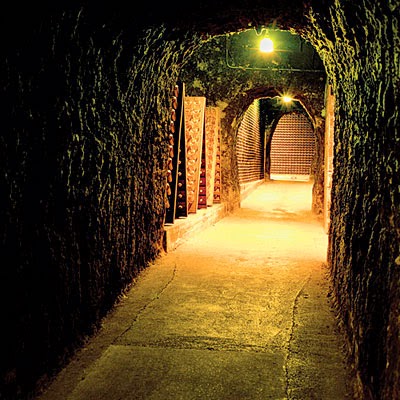
 The Schramsberg story begins in 1862 when Jacob Schram purchases 200 acres on Diamond Mountain, a few miles south of the town of Calistoga.  He immediately planted vines and dug underground caves for which to cellar his wine.  As he began to prosper, a lavish Victorian house was built on the property.

*Schram Victorian House

*Napa's first hillside caves

The winery continued to prosper through 1905 when Jacob Schram dies and his son, Herman inherits the business.  By 1912 the winery ceases to operate and is sold.  The story pics up when in 1965 Jack and Jamie Davies purchase the now Historically Registered Schramsberg.  Their lofty goal was to produce sparkling wine with richness and complexity, fermented in the authentic Methode Traditionnelle process, as expressive as any of the great Champagnes-delicate, yet possessing distinct individuality and style.

I have talked about the Methode sparkling wine making process before and the Schramsberg has had one special person at their disposal...meet Ramon the riddler...


Just a few of the 20th Century Schramsberg highlights...

The 1965 Blanc de Blancs was a product of the first commercial use of Chardonnay in an American sparkling wine

The 1967 Blanc de Noirs is produced using Pinot Noir according to the classic style

The 1969 Blanc de Blancs was served at the "Toast to Peace" in Beijing, between President Richard Nixon and Premier Zhou Enlai

This holiday season try adding some great American sparkling to your holiday magic...just think of Don not Dom..."Tiny bubbles in the wine...make me feel happy, make me feel fine."-Don Ho

http://www.schramsberg.com/index.html

Friday, December 5, 2014

"It's Repeal Day...how will you celebrate?  How about some Woodford?"

Repeal day is celebrated every December 5th in honor of the passing of the Twenty-first Amendment to the United States Constitution in 1933.  Prohibition was over and we never looked back.

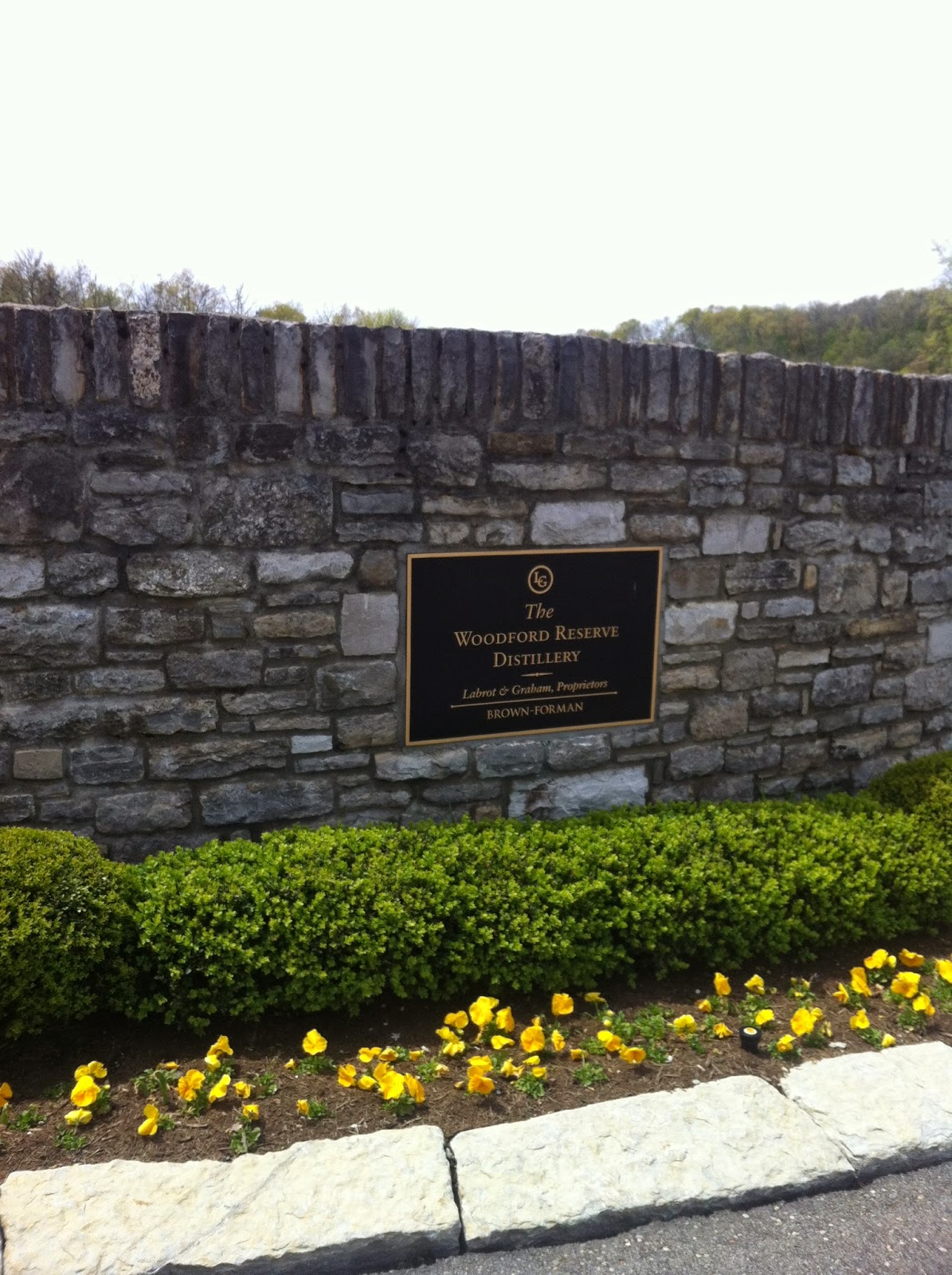
Woodford Reserve is produced at the historic Labrot and Graham Distillery in Versailles, Kentucky.  It is one of Kentucky's oldest working distilleries and was built on the Glenn's Creek by Elijah Pepper in 1812.  His son Oscar Pepper later hired Dr. James Crow as master distiller.  Crow perfected the art of bourbon making by introducing scientific methods.  The Labrot and Graham Distillery succeded Old Peppers in 1878.

The landscape is just as beautiful as the bourbon in the bottle...


How about celebrating with a classic Mint Julep?


Barragan's Mint Julep

2 oz of Woodford Reserve Bourbon
1 oz Mint Syrup
6 fresh mint leaves

Shake vigorously with ice and no need to muddle. The ice will help release the aromas of the mint and make for a cleaner drink.  Strain over crushed ice and garnish with a sprig.

Mint Syrup Recipe:
Boil one cup of water and stir in one cup of Turbinado Sugar (Sugar in the Raw) and a fresh bundle of mint.  Allow the mint to simmer for 5 minutes at medium heat.  Strain the mint through a fine mesh strainer and keep cool until ready to use.

Cheers!

Saturday, November 29, 2014

"Tequila...a true gift of the gods"


Many call it the Devil's liquor, but did you know that this drink is actually a story of drinking one with a true divinity?  As legend tells, Quetzalcoatl and Mayahuel were fleeing tzizitzimime (star demons) and tried to disguise themselves as the branches of a tree.  Mayahuel was recognized and torn into small pieces.  Quetzalcoatl buried the pieces which in turn sprouted into the first maguey plants.

The maguey plant (or Agave) became the reincarnation of the goddess Mayahuel.  The sweet honey-like sap (aguamiel) was her blood.  The secret of fermenting the juice into pulque (a fermented non-distilled drink of the ancients) was given to man by the trickster figure, Tlacuache.


*Casa Orendain's field of Blue Weber Agave

Tequila was not officially produced until the middle 1700's.  The King of Spain granted land to Don Jose Antonio Cuervo to plant crops that could be turned into alcohol.  It was the first time the ancient pulque was distilled and eventually became known as Tequila.

Here is a winter warmer to enjoy with your divine tequila...

Hot Xocolat

1oz Herradura Reposado Tequila 
6 oz Mexican Hot Chocolate
2 oz Whipped Cream dusted with cinnamon, nutmeg, sugar and cayenne pepper

To make this Mexican Hot Chocolate I used Abuelita Mexican Chocolate (one whole disk crushed) to 2 cups of milk.  I also added 2 oz of Dark Belgium Chocolate and a pinch of cinnamon.  Stir until completely dissolved.

To make dusting use 1 tsp Cinnamon, 1 tsp Nutmeg, 1 tsp Sugar and 1/2 tsp Cayenne Pepper.  Mix in a separate bowl and distribute by pinching fingers and sprinkling accordingly.


Salud!


Friday, November 21, 2014

"It's a Perry..."


It sparkles...it has a nice astringency...it has a nice residual sweetness (off dry), but don't call this a cider.  Perry has a category all to its own and should not be confused with a Cider (which denotes an appple base).  A Perry is an alcoholic beverage made from fermented pears.  It has been common for centuries in England, especially Gloucestershire, Herefordshire and Worcestershire as well as parts of South Wales and France, especially Anjou and Normandy.

Traditionally Perry is made in a very similar way that Cider is made; fruit is picked, crushed and pressed.  Wild yeasts found on the fruits skin is used to begin fermentation.  Unlike Ciders, Perrys must be left to sit for a critical period to mature after picking and the pomace must be left to stand after the initial crushing to lose tanins.  After initial fermentation, the Perry undergoes a secondary malolactic fermentation while maturing.

Perrys will often have a higher level of sugar than Ciders, including unfermentable sugars like sorbitol, which can give the finished drink a residual sweetness.  Typically they will also have a higher astringency than their counterparts.

During my last visit to NYC, we had lunch at Roberta's in Brooklyn.  They were offering a Perry by the glass.  That day was quite warm and an off-dry Perry is just what I wanted to cool down with.  This one did not disappoint...it was Poire Authentique by Eric Bordelet.  It had wonderful poached pear aromas, with hints of cinnamon and nutmeg and just a kiss of lime on the palate.  The finish was long and astringent and made me pine for more!  Like a cider these are naturally gluten free and very enjoyable as aperitifs and would even do nicely with a poached pear at the end of dinner!

These are not easy to find, but well worth seeking out!

Cheers!

http://www.ericbordelet.com/ 

Tuesday, November 11, 2014

"It's good Scottish weather...time for a Rob Roy"


The Rob Roy is a classic scotch cocktail and is probably one of the most well known of all classic scotch cocktails.  It was created in 1894 at the Waldorf Astoria in New York and is kin to the Manhattan.  The drink was named in honor of the premiere of Rob Roy, an operetta by composer Reginald De Koven and lyricist Harry B. Smith loosely based upon Scottish folk hero Robert Roy MacGregor.

So who is Rob Roy?  Records show Raibeart Ruadh MacGriorgair was baptised March 7, 1671 and died December 28, 1734.  He was a Scottish folk hero and outlaw of the early 18th century.  Rob was a well known and respected cattleman.  He had borrowed a large sum of money to increase his own cattle herd, but his chief herder disappeared along with the loaned money.  As a consequence, Rob defaulted on the loan and was branded an outlaw, while his lands were seized as forfeiture. A private blood feud was waged against his creditor the Duke of Montrose, for which he was eventually imprisoned and summarily pardoned a few years later.

The Waldorf Astoria bar book lists the ingredients as Orange Bitters, Scotch and Sweet Vermouth.  I have come to love this cocktail, but I believe that scotch is the base of this cocktail just as Rye whiskey is the base of a Manhattan.  Being a Highland folk hero, I tend to lean toward a well made Highland Scotch...

Barragan's Rob Roy

2 oz Glenfiddich 18 Year
1 oz Carpano Antica Sweet Vermouth
2 dashes Angostura Bitters
garnish with a Luxardo Cherry